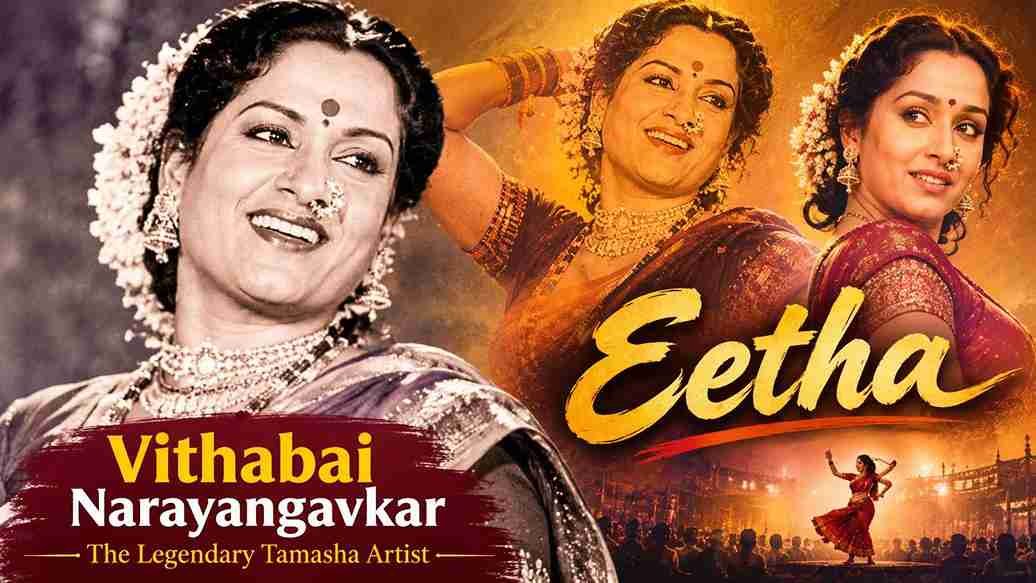
Vithabai Bhau Mang Narayangavkar Biography – The Legendary Queen of Maharashtra’s Tamasha Folk Art
Maharashtra has a rich tradition of folk arts, and several talented artists have dedicated their lives to preserving its cultural heritage. Among these legendary personalities, Vithabai Bhau Mang Narayangavkar holds a special place.
Known for her extraordinary Lavani performances, exceptional dancing skills, and remarkable dedication to Tamasha, Vithabai captivated audiences across Maharashtra. Her graceful movements, expressive acting, command over rhythm, and powerful stage presence made her one of the most celebrated female folk performers in the state.
However, her journey was not just about fame and recognition. Behind her success were years of hard work, personal sacrifices, family responsibilities, and an unwavering commitment to the artists who depended on her.
Who Was Vithabai Narayangavkar?
Vithabai Bhau Mang Narayangavkar was a renowned Maharashtra folk artist and Lavani dancer who made an extraordinary contribution to traditional Tamasha performances. She considered Tamasha not merely an entertainment profession but a lifelong mission. Along with developing her own artistic identity, she also took responsibility for supporting numerous performers and their families associated with her Tamasha troupe. The name ‘Narayangavkar’ connects her identity with Narayangaon, a village closely associated with her life and artistic journey. In the traditional Tamasha community, many performers have adopted the names of their native villages as part of their professional identities. Vithabai’s name therefore represents not only an individual artist but also the cultural heritage of Narayangaon and Maharashtra’s folk traditions.
An Extraordinary Story of Motherhood on the Tamasha Stage
One of the most remarkable stories associated with Vithabai’s life is the incident surrounding the birth of her child during a Tamasha performance.
According to an interview with her son, Kailas Narayangavkar, the incident reportedly took place around 1967 during a Mahadev pilgrimage festival at Shikhar Shingnapur. At that time, Vithabai was nine months pregnant and was performing with her Tamasha troupe. During the performance, she began experiencing labour pains and went backstage. There, she gave birth to her child. Surprisingly, after some time, she returned to the stage and resumed dancing. The audience was astonished to see an artist who had given birth only a short while earlier returning to perform. This extraordinary incident reflects her dedication to her art and the demanding circumstances faced by women performers during that era. It also highlights the physical and emotional challenges that female folk artists often had to endure.
Why Did Vithabai Reject Raj Kapoor’s Film Offer?
Vithabai’s popularity extended beyond Maharashtra. Her remarkable performances impressed audiences from different backgrounds, including prominent personalities from the entertainment industry.
According to her son’s recollections, legendary filmmaker and actor Raj Kapoor was deeply impressed after watching her performance and expressed interest in offering her an opportunity in the film industry.
However, Vithabai decided not to accept the opportunity. The reason behind her decision was her sense of responsibility towards the people working in her Tamasha troupe. Nearly 100 people depended on her troupe for their livelihood. She believed that if she moved into the film industry, the families of those performers could face financial difficulties. Instead of pursuing personal fame and opportunities, she chose to remain committed to her fellow artists.
This decision reflects her leadership, generosity, and deep sense of responsibility towards the Tamasha community.
Tamasha Was More Than Entertainment – It Supported Hundreds of Lives
For Vithabai, a Tamasha troupe was not simply a performing group. It was a source of livelihood for numerous artists and their families. She understood that every performer working with her had financial responsibilities and a family to support.
According to memories shared by her children, she always gave importance to the well-being of the people associated with her troupe rather than focusing only on personal wealth.
Despite her popularity and the large audiences attending her performances, she did not prioritise building a luxurious lifestyle for herself. Her family continues to live in a simple two-room house in Narayangaon, which reflects the modest lifestyle associated with her personal journey.
National Recognition Through the President’s Award
Vithabai’s contribution to folk art was recognised beyond Maharashtra. Her talent earned her recognition at the national level. According to her son’s recollection, she travelled to Delhi in 1990 to attend a President’s Award ceremony. When Vithabai arrived on stage, the audience welcomed her with tremendous applause. She respectfully greeted the President and other distinguished guests present at the event. Her son also recalls a memorable incident from the ceremony. After receiving the award, Vithabai wanted a photograph with President R. Venkataraman. She personally approached him again and requested him to join her for a photograph. Her confidence and enthusiasm surprised those present at the event.
This memorable moment became an important part of her family’s memories and represented the recognition of Maharashtra’s traditional folk performers at the national level.
Vithabai’s Simple Home and Extraordinary Legacy
Considering Vithabai’s popularity and the success of her performances, she could have potentially lived a much more luxurious life.
Her shows attracted large audiences, and many influential personalities, including politicians and respected public figures, admired her performances. Yet, her home in Narayangaon remained simple. It consisted of two rooms, a small prayer space, a kitchen, and an open courtyard. She spent much of her life in this modest environment.
According to her family members, Vithabai’s personality was extraordinary, but her lifestyle remained simple. Her life demonstrates that true greatness is not measured by material wealth, but by the impact a person creates through their work and dedication.
Family Struggles and the Responsibility of Continuing Her Tamasha Tradition
Vithabai faced several personal and professional challenges during the later years of her life.
According to her son, the formation of separate Tamasha troupes by family members deeply affected her emotionally. In 1987, she had to discontinue her ongoing Tamasha troupe.
After her passing, her family members made efforts to continue the traditional Tamasha business under her name.
Even today, her family continues to operate a troupe associated with the name Vithabai Bhau Mang Narayangavkar.
However, modern Tamasha performers face several financial difficulties, including increasing transportation expenses, diesel costs, artists’ payments, vehicle maintenance, and the uncertainty of cancelled programmes.
During the interview, her family members revealed that the Tamasha troupe was carrying a debt of approximately ₹17 lakh.
Despite these challenges, the family continues to work towards preserving Vithabai’s name and artistic legacy.
What Challenges Does Tamasha Folk Art Face Today?
There is a significant difference between the Tamasha performances of Vithabai’s era and those of today. Earlier, traditional elements such as Gan, Gavalan, Lavani, and Vagnatya received tremendous appreciation from audiences.
Performances often began at night and continued until early morning.
However, audience preferences and entertainment options have changed considerably.
- Some of the major challenges facing the Tamasha industry today include:
- Declining interest in traditional Gan and Gavalan performances.
- Increasing payments for performers and production management.
- Rising transportation, diesel, and vehicle maintenance expenses.
- Security and licensing difficulties during rural performances.
- Lack of respect and recognition for female performers.
- Reduced interest among younger generations in joining the Tamasha profession.
Vithabai’s family members have raised an important concern: traditional folk art can survive only when artists receive proper respect, dignity, and security.
The Struggles of Women in Maharashtra’s Tamasha Industry
Women have played an essential role in the development of Tamasha and Lavani.
However, female performers have frequently faced social criticism, inappropriate comments, and uncomfortable working conditions.
Experiences shared by women in Vithabai’s family reveal that the hard work behind live performances is often overlooked.
Instead of appreciating their artistic abilities, some audience members make disrespectful remarks about their appearance and personal lives.
Such behaviour discourages younger generations from entering the profession.
Vithabai’s era and today’s Tamasha industry reflect an important difference in how performers are treated and respected.
Her family’s experiences highlight the urgent need to protect the dignity and safety of folk artists.
Vithabai’s Legacy Continues After Her Death
Vithabai’s passing was a deeply emotional loss for her family.
According to her children’s recollections, her health deteriorated around January 14. She was taken to Pune for medical treatment and admitted to KEM Hospital.
She remained under treatment for two days and passed away on the third day.
Her death created an atmosphere of grief in Narayangaon and throughout the Tamasha community.
Even today, her children and grandchildren remember her every day.
The Tamasha troupe associated with her name remains an important symbol of her family’s efforts to preserve her artistic tradition.
Her legacy continues through the performances, memories, and cultural contributions of the people who remain connected to her work.
Did Vithabai Narayangavkar Deserve the Padma Shri?
According to her children, Vithabai’s contribution to Maharashtra’s Tamasha and folk traditions was extraordinary, and they believe she deserved national recognition such as the Padma Shri. Her contribution was not limited to dancing or entertaining audiences.
She supported numerous performers, provided employment opportunities, preserved traditional Tamasha performances, and prioritised the well-being of her fellow artists.
Her life story also brings attention to the social and financial difficulties faced by traditional folk performers.
Recognising artists like Vithabai is important not only for their individual achievements but also for preserving India’s cultural heritage.
Conclusion – Vithabai Narayangavkar Will Always Be Remembered in Maharashtra’s Folk Art History
The life of Vithabai Bhau Mang Narayangavkar represents an extraordinary combination of artistic dedication, hard work, motherhood, sacrifice, and determination.
She never considered Tamasha merely a form of entertainment. For her, it was a tradition that supported the livelihoods of many families.
Even when she had opportunities to pursue personal fame, she remained committed to the artists who depended on her.
Despite living a simple life, she earned an extraordinary place in the hearts of people across Maharashtra.
Today, Tamasha faces several challenges, but Vithabai’s journey continues to remind younger generations of the importance of preserving Maharashtra’s traditional folk arts.
Vithabai Narayangavkar is not just the name of a legendary performer. She represents the dedication, courage, and artistic spirit of Maharashtra’s Tamasha tradition.
Her art, struggles, and commitment to folk culture will remain an unforgettable part of Maharashtra’s cultural history. Discover the inspiring life story of Vithabai Bhau Mang Narayangavkar, Maharashtra’s legendary Tamasha and Lavani artist, her struggles, awards, and contribution to folk culture.
Vithabai Bhau Mang Narayangavkar | Frequently Asked Questions (FAQs):
1. Who was Vithabai Narayangavkar?
Vithabai Bhau Mang Narayangavkar was a famous Maharashtra folk artist and Lavani dancer. She made a remarkable contribution to traditional Tamasha performances through her exceptional dancing skills and dedication.
2. Where was Vithabai Narayangavkar from?
Vithabai was closely associated with Narayangaon village in Maharashtra, which became an important part of her identity as a folk performer.
3. Did Vithabai Narayangavkar reject an offer from Raj Kapoor?
According to her son’s interview, Raj Kapoor expressed interest in offering her an opportunity in the film industry after watching her performance. However, she reportedly declined because she did not want to leave the approximately 100 people who depended on her Tamasha troupe.
4. Which national award did Vithabai Narayangavkar receive?
According to her son’s recollection, she received a President’s Award at a ceremony in Delhi in 1990.
5. How many people depended on Vithabai’s Tamasha troupe?
According to her family’s interview, approximately 100 people depended on her Tamasha troupe for their livelihood.
6. What made Vithabai Narayangavkar’s performances special?
Her graceful Lavani dancing, remarkable flexibility, expressions, command over rhythm, and powerful stage presence made her performances memorable.
7. Which film is based on the life of Vithabai Narayangavkar?
A film based on the life and journey of Vithabai Bhau Mang Narayangavkar is being made to bring her extraordinary contribution to Maharashtra’s Tamasha and folk-art tradition to a wider audience. The interview mentions that the film’s teaser has been released, but it does not clearly state the film’s official title.
8. What is Tamasha?
Tamasha is a traditional folk theatre form of Maharashtra. It combines Lavani dance, music, singing, acting, humour, and storytelling to entertain audiences. It is also an important part of Maharashtra’s cultural heritage and has provided a livelihood to generations of folk artists.
9. When did audiences become mesmerised by Vithabai Narayangavkar’s performances?
Audiences were mesmerised whenever Vithabai performed on the Tamasha stage, especially during Lavani performances. Her remarkable dancing skills, graceful and flexible movements, powerful stage presence, and expressive performances captivated audiences. According to her family’s recollections, thousands of people would gather to watch her shows, and audiences from different walks of life admired her talent.
10. Which film is based on the life of Vithabai Narayangavkar?
The upcoming biographical film Eetha (2026) is based on the life and journey of legendary Tamasha and Lavani artist Vithabai Bhau Mang Narayangavkar. Actress Shraddha Kapoor plays the lead role, and the film is directed by Laxman Utekar. Its theatrical release is scheduled for 4 December 2026. Therefore, as of 20 November 2026, the film has not yet been released in cinemas.
More Songs Like You!
श्री लक्ष्मी सुक्तम् Shri Lakshmi Suktam Lyrics
रणरागिणी Ranaragini Lyrics
तुझ्या कुशीत आई Tujhya Kushit Aai Lyrics
चम चम चांदण Cham Cham Chandana Lyrics
Jijai Marathi Movie Trailer
शंभर पैकी शंभर Shambhar Paiki Shambhar Lyrics
बंधू रामाचा जन्मला Bandhu Ramacha Janmala
निज निज रे बाळा Nij Nij Re Bala Lyrics
आई जिजाई Aai Jijai Lyrics