श्री हनुमान चालीसा | Shree Hanuman Chalisa Lyrics in Hindi – Sonu Nigam
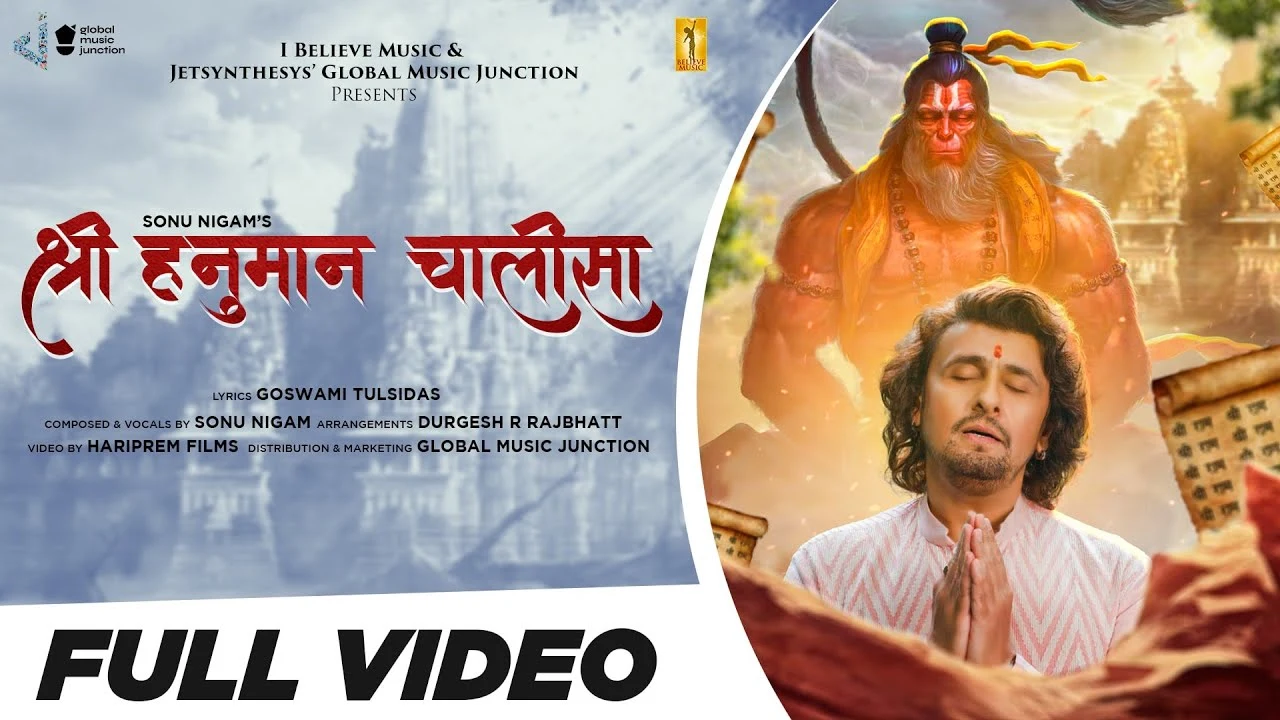
I Believe music and Jetsynthesys’ Global Music Junction Presents Shree Hanuman Chalisa Lyrics in Hindi, composed and sung by Sonu Nigam. Hanuman Chalisa was written by Goswami Tulsidas in Awadhi language in the 16th century, who also authored Ramcharitmanas.
Shree Hanuman Chalisa Songs Bhajan Details:
| ♪ Song Title: | Shree Hanuman Chalisa |
| ♪ Singer: | Sonu Nigam |
| ♪ Lyrics: | Goswami Tulsidas (Traditional) |
| ♪ Music: | Durgesh R Rajbhatt |
| ♪ Music Label: | Global Music Junction |
| ♪ Released By: | January 14, 2023. |
Shree Hanuman Chalisa Lyrics in Hindi
श्रीगुरु चरन सरोज रज , निजमन मुकुरु सुधारि। बरनउं रघुबर बिमल जसु, जो दायक फल चारि।।
बुद्धिहीन तनु जानिके, सुमिरौं पवन-कुमार। बल बुधि बिद्या देहु मोहिं, हरहु कलेस बिकार।।
चौपाई
जय हनुमान ज्ञान गुन सागर।
जय कपीस तिहुं लोक उजागर।।राम दूत अतुलित बल धामा।
अंजनि-पुत्र पवनसुत नामा।।
महाबीर बिक्रम बजरंगी।
कुमति निवार सुमति के संगी।।
कंचन बरन बिराज सुबेसा।
कानन कुण्डल कुँचित केसा।।
हाथ बज्र औ ध्वजा बिराजे।
कांधे मूंज जनेउ साजे।।
शंकर सुवन केसरी नंदन।
तेज प्रताप महा जग वंदन।।
बिद्यावान गुनी अति चातुर।
राम काज करिबे को आतुर।।
प्रभु चरित्र सुनिबे को रसिया।
राम लखन सीता मन बसिया।।
सूक्ष्म रूप धरि सियहिं दिखावा।
बिकट रूप धरि लंक जरावा।।
भीम रूप धरि असुर संहारे।
रामचन्द्र के काज संवारे।।
लाय सजीवन लखन जियाये।
श्री रघुबीर हरषि उर लाये।।
रघुपति कीन्ही बहुत बड़ाई।
तुम मम प्रिय भरतहि सम भाई।।
सहस बदन तुम्हरो जस गावैं।
अस कहि श्रीपति कण्ठ लगावैं।।
सनकादिक ब्रह्मादि मुनीसा।
नारद सारद सहित अहीसा।।
जम कुबेर दिगपाल जहां ते।
कबि कोबिद कहि सके कहां ते।।
तुम उपकार सुग्रीवहिं कीन्हा।
राम मिलाय राज पद दीन्हा।।
तुम्हरो मंत्र बिभीषन माना।
लंकेश्वर भए सब जग जाना।।
जुग सहस्र जोजन पर भानु।
लील्यो ताहि मधुर फल जानू।।
प्रभु मुद्रिका मेलि मुख माहीं।
जलधि लांघि गये अचरज नाहीं।।
दुर्गम काज जगत के जेते।
सुगम अनुग्रह तुम्हरे तेते।।
राम दुआरे तुम रखवारे।
होत न आज्ञा बिनु पैसारे।।
सब सुख लहै तुम्हारी सरना।
तुम रच्छक काहू को डर ना।।
आपन तेज सम्हारो आपै।
तीनों लोक हांक तें कांपै।।
भूत पिसाच निकट नहिं आवै।
महाबीर जब नाम सुनावै।।
नासै रोग हरे सब पीरा।
जपत निरन्तर हनुमत बीरा।।
संकट तें हनुमान छुड़ावै।
मन क्रम बचन ध्यान जो लावै।।
सब पर राम तपस्वी राजा।
तिन के काज सकल तुम साजा।।
और मनोरथ जो कोई लावै।
सोई अमित जीवन फल पावै।।
चारों जुग परताप तुम्हारा।
है परसिद्ध जगत उजियारा।।
साधु संत के तुम रखवारे।।
असुर निकन्दन राम दुलारे।।
अष्टसिद्धि नौ निधि के दाता।
अस बर दीन जानकी माता।।
राम रसायन तुम्हरे पासा।
सदा रहो रघुपति के दासा।।
तुह्मरे भजन राम को पावै।
जनम जनम के दुख बिसरावै।।
अंत काल रघुबर पुर जाई।
जहां जन्म हरिभक्त कहाई।।
और देवता चित्त न धरई।
हनुमत सेइ सर्ब सुख करई।।
सङ्कट कटै मिटै सब पीरा।
जो सुमिरै हनुमत बलबीरा।।
जय जय जय हनुमान गोसाईं।
कृपा करहु गुरुदेव की नाईं।।
जो सत बार पाठ कर कोई।
छूटहि बन्दि महा सुख होई।।
जो यह पढ़ै हनुमान चालीसा।
होय सिद्धि साखी गौरीसा।।
तुलसीदास सदा हरि चेरा।
कीजै नाथ हृदय महं डेरा।।
दोहा
पवनतनय संकट हरन, मंगल मूरति रूप।
राम लखन सीता सहित, हृदय बसहु सुर भूप।।
Hanuman Chalisa in English
|| Doha ||
Shri Guru Charan Saroj Raj, Nija Manu Mukura Sudhari |
Baranau Raghuvar Bimal Jasu, Jo Dayaku Phala Chari ||
Budheeheen Tanu Jannike, Sumiro Pavan Kumara |
Bal Buddhi Vidya Dehoo Mohee, Harahu Kalesh Vikaar |||| Chaupai ||
Jai Hanuman Gyan Gun Sagar | Jai Kapis Tihun Lok Ujagar ||
Ram Doot Atulit Bal Dhama | Anjani Putra Pavan Sut Nama ||
Mahabir Vikram Bajrangi | Kumati Nivar Sumati Ke Sangi ||
Kanchan Varan Viraj Subesa | Kanan Kundal Kunchit Kesha || 4Hath Vajra Aur Dhwaja Viraje | Kaandhe Moonj Janeu Saaje ||
Sankar Suvan Kesri Nandan | Tej Prataap Maha Jag Vandan ||
Vidyavaan Guni Ati Chatur | Ram Kaj Karibe Ko Aatur ||
Prabhu Charitra Sunibe Ko Rasiya | Ram Lakhan Sita Man Basiya || 8Sukshma Roop Dhari Siyahi Dikhava | Vikat Roop Dhari Lank Jalava ||
Bhim Roop Dhari Asur Sanhare | Ramachandra Ke Kaj Sanvare ||
Laye Sanjivan Lakhan Jiyaye | Shri Raghuvir Harashi Ur. Laye ||Raghupati Kinhi Bahut Badai | Tum Mama Priya Bharat-Hi-Sam Bhai || 12
Sahas Badan Tumharo Yash Gaave | As Kahi Shripati Kanth Lagaave ||
Sankadhik Brahmaadi Muneesa | Narad Sarad Sahit Aheesa ||
Yam Kuber Dikpaal Jahan Te | Kavi Kovid Kahi Sake Kahan Te ||
Tum Upkar Sugreevahin Keenha | Ram Milaye Rajpad Deenha || 16
Tumhro Mantra Vibheeshan Maana | Lankeshwar Bhaye Sab Jag Jana ||
Yug Sahasra Yojan Par Bhanu | Leelyo Tahi Madhur Phal Janu ||
Prabhu Mudrika Meli Mukh Mahee | Jaladhi Langhi Gaye Achraj Nahee ||
Durgam Kaj Jagat Ke Jete | Sugam Anugraha Tumhre Tete || 20
Ram Duwaare Tum Rakhvare | Hot Na Agya Binu Paisare ||
Sab Sukh Lahai Tumhari Sarna | Tum Rakshak Kahu Ko Darna ||
Aapan Tej Samharo Aapai | Teenon Lok Hank Te Kanpai ||
Bhoot Pisaach Nikat Nahin Aavai | Mahavir Jab Naam Sunavai || 24
Nase Rog Harae Sab Peera | Japat Nirantar Hanumat Beera ||
Sankat Se Hanuman Chhudavai | Man Kram Vachan Dhyan Jo Lavai ||
Sab Par Ram Tapasvee Raja | Tin Ke Kaj Sakal Tum Saja ||
Aur Manorath Jo Koi Lavai | Soi Amit Jeevan Phal Pavai || 28
Charon Jug Partap Tumhara | Hai Parsiddh Jagat Ujiyara ||
Sadhu Sant Ke Tum Rakhware | Asur Nikandan Ram Dulare ||
Ashta Siddhi Nav Nidhi Ke Data | As Var Deen Janki Mata ||
Ram Rasayan Tumhare Pasa | Sada Raho Raghupati Ke Dasa || 32
Tumhare Bhajan Ram Ko Pavai | Janam Janam Ke Dukh Bisraavai ||
Antkaal Raghuvar Pur Jayee | Jahan Janam Hari Bhakt Kahayee ||
Aur Devta Chitt Na Dharahin | Hanumat Sei Sarv Sukh Karahin ||
Sankat Kate Mite Sab Peera | Jo Sumirai Hanumat Balbeera || 36
Jai Jai Jai Hanuman Gosain | Kripa Karahun Gurudev Ki Nayin ||
Jo Shat Bar Path Kare Koi | Chhutahin Bandi Maha Sukh Hoi ||Jo Yeh Padhe Hanuman Chalisa | Hoye Siddhi Saakhi Gaureesa ||
Tulsidas Sada Hari Chera | Keejai Nath Hriday Mahn Dera || 40
|| Doha ||
Pavan Tanay Sankat Harana, Mangala Murati Roop |
Ram Lakhan Sita Sahita, Hriday Basahu Soor Bhoop ||
*Shri Hanuman Chalisa: Meaning, Origin, Benefits & Spiritual Essence*
Introduction: The Eternal Hymn of Devotion
The Shri Hanuman Chalisa is one of the most revered hymns in Hinduism, devoted to Lord Hanuman — the divine embodiment of strength, devotion, wisdom, and selfless service. Composed by the great Bhakti poet-saint “Goswami Tulsidas” in the 16th century, this sacred text is written in the Awadhi language as a part of his monumental work, Ramcharitmanas. The word “Chalisa” literally means forty, referring to the forty verses that glorify Lord Hanuman’s virtues and deeds. Through rhythmic verses and poetic devotion, the Chalisa inspires faith, courage, and protection among devotees. It remains one of the most recited stotras across India and the world, symbolizing the living spirit of the “Bhakti Marg” (the path of devotion). Get more strength for your new year with “Hanuman” Chalisa. Chanting the Shree Hanuman Chalisa will relieve any illness or adversity and bring prosperity to one’s life.
The Legend of Lord Hanuman:
Lord Hanuman, often called Pavan Putra or Vayuputra, was born by the grace of the Wind God (Pavan Dev). Regarded as an incarnation of Lord Shiva, Hanuman represents supreme power, humility, and unwavering devotion toward Lord Rama, the seventh avatar of Vishnu. It is said that Lord Shiva took the form of Hanuman to remain close to Rama during His earthly incarnation. As one of the Chiranjivis (immortals), Hanuman continues to be the protector of devotees, symbolizing divine energy, courage, and wisdom. Across India, numerous Hanuman temples stand as symbols of faith, each believed to fulfill the heartfelt wishes of worshippers.
The Meaning and Structure of the Hanuman Chalisa:
The “Hanuman Chalisa” begins with two introductory “dohas” (couplets) invoking divine blessings, followed by forty “chaupais” (quatrains) praising Hanuman’s deeds, devotion, and powers. It concludes with a final “doha” expressing gratitude and faith. Each verse celebrates Hanuman’s qualities — his loyalty to Rama, his immense strength, his wisdom, and his compassion. A famous line, “Ram doot atulit bal dhama,” translates to “You are Lord Rama’s messenger and the abode of immeasurable strength.” The poetic flow and rhyming pattern of the Chalisa make it easy to memorize and recite, ensuring its transmission through generations.
Spiritual Benefits of Reciting the Hanuman Chalisa:
- Strength and Courage, Lord: Hanuman personifies indomitable courage. Regular recitation of the Chalisa is believed to bless devotees with mental and physical strength, enabling them to overcome fear, doubt, and negativity. The verses serve as reminders of inner power and self-belief.
- Protection from Evil: The Chalisa is considered a shield against evil influences. The line “Bhoot pishach nikat nahi aavai, mahavir jab naam sunavai” affirms that no negative entity can harm one who chants Hanuman’s name. Devotees find great comfort in its protective energy.
- Relief from Suffering: One of the most popular verses states, “Nase rog hare sab peera, japat nirantar Hanumat beera” — “All diseases and sorrows disappear by constant remembrance of Hanuman.” The vibrations of chanting are believed to harmonize body and mind, relieving stress and ailments.
- Focus, Clarity, and Success: Chanting the Chalisa improves concentration and mental clarity. Many students and professionals recite it to enhance focus and achieve goals. It inspires persistence, confidence, and a positive outlook, leading to overall success in life.
- Removal of Planetary Doshas: Astrologically, Lord Hanuman is believed to counter the malefic effects of Saturn (Shani). Reciting the Chalisa is said to mitigate Sade Sati and reduce the impact of bad karma, bringing peace and stability into one’s life.
- Spiritual Growth and Moksha: Beyond worldly gains, the ultimate aim of devotion is liberation (Moksha). Chanting the Hanuman Chalisa purifies the heart, aligns the soul toward righteousness, and leads devotees on the divine path of *Bhakti Marg, ultimately guiding them closer to God.
*Psychological and Meditative Effects:
Modern research on mantra meditation suggests that rhythmic chanting regulates breathing, calms the nervous system, and enhances emotional well-being. Many devotees describe feeling centered, fearless, and spiritually uplifted after reciting the Chalisa. Much like mindfulness, the repetitive nature of the verses cultivates focus, gratitude, and inner peace. Chanting with sincerity can thus be both a devotional and therapeutic practice.
How to Recite the Hanuman Chalisa: Step-by-Step Guide:
- Choose the Right Time:
The most auspicious times are Brahma Muhurta (4–6 AM) or early evening. Tuesdays and Saturdays are considered sacred for Hanuman worship. - Purify Yourself and the Space:
Bathe, wear clean clothes, and sit in a calm, clean space. Light a lamp or incense to create a peaceful atmosphere. - Prepare with Devotion
Place an image or idol of Hanuman before you. Begin by chanting “Shri Ram” or the Hanuman Mool Mantra to invoke divine energy. - Posture and Focus
Sit cross-legged with a straight spine. Close your eyes or fix your gaze on Hanuman’s image, maintaining full concentration. - Recite Slowly and Clearly
Chant each verse with devotion, understanding its meaning. You may follow along with printed or digital lyrics in Hindi or English.
Use a Mala for Counting
Use a Tulsi or Rudraksha mala (108 beads) if you wish to count recitations. Common counts are 11, 51, or 108 times.
Conclude with Gratitude
After finishing, sit silently for a few moments in prayerful reflection. Offer your gratitude to Hanuman for his blessings.
*Hanuman Chalisa Around the World*
The popularity of the Hanuman Chalisa transcends regions and languages. It is recited daily in homes and temples, not just in India, but also across Nepal, Mauritius, Fiji, Indonesia, and among the global Hindu diaspora.
In Tamil Nadu, Gujarat, and Maharashtra, devotees chant localized versions; in the West, English transliterations help global followers learn the verses. Whether sung during Hanuman Jayanti celebrations, kirtans, or private prayers, its power remains universal — a timeless hymn of faith and resilience.
Hanuman Chalisa vs. Sundar Kand
Both texts glorify Lord Hanuman but differ in form and purpose.
Hanuman Chalisa: A concise 40-verse hymn focusing on Hanuman’s virtues and powers.
Sundar Kand: A chapter from Ramcharitmanas detailing Hanuman’s heroic journey to Lanka, meeting Sita, and setting Ravana’s city ablaze.
While the Sundar Kand narrates divine events, the Chalisa* serves as a daily devotional chant — a personal connection between devotee and deity.
Conclusion: The Living Spirit of Bhakti
The Shri Hanuman Chalisa is far more than a hymn — it is a timeless spiritual guide. Each verse echoes the eternal truth that faith, devotion, and courage can overcome all fear and difficulty.
Through regular chanting, devotees feel Hanuman’s presence as a protector and guide, instilling strength and peace. As one verse proclaims, “Sab par Ram tapasvi raja, tin ke kaj sakal tum saja” — “All the tasks of Rama are fulfilled through you.”
Thus, the Hanuman Chalisa stands as a beacon of hope, reminding every devotee that divine strength lies within, waiting to be awakened through devotion.
श्री हनुमान चालीसा | Shree Hanuman Chalisa | Music Video Song | Sonu Nigam | Shree Hanuman Chalisa | Bhakti Bhajan
Read More Songs: