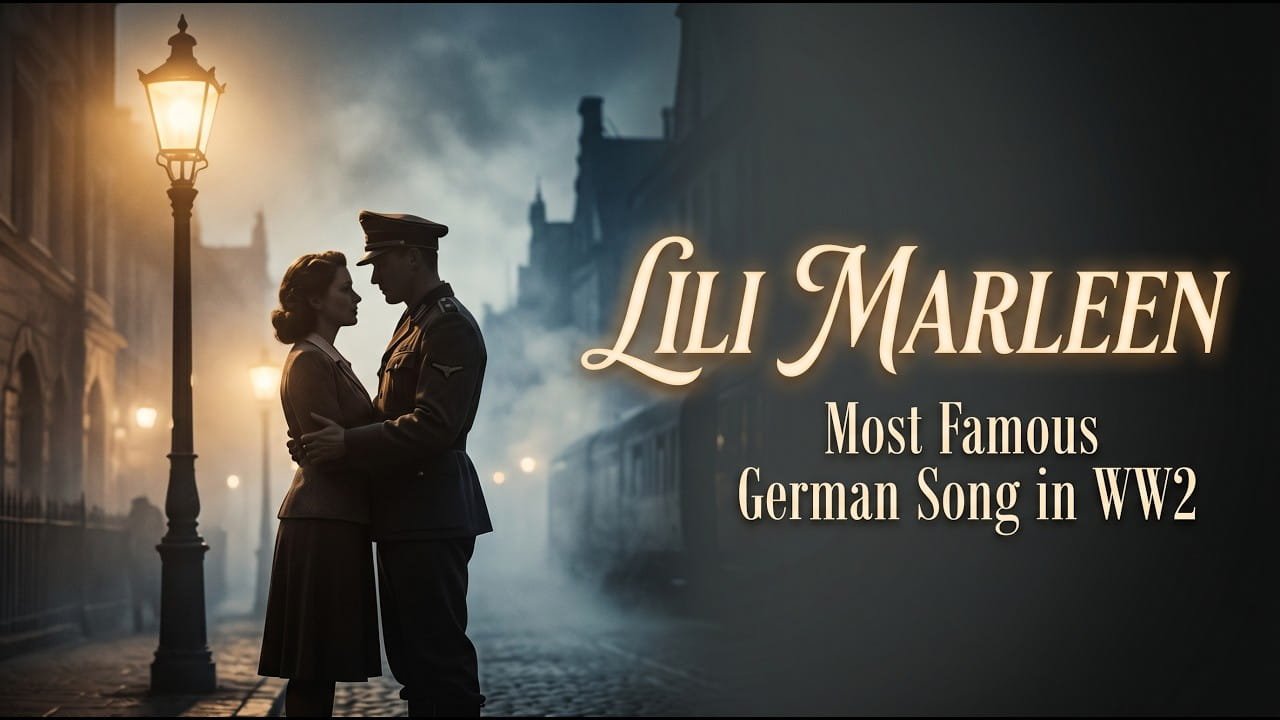
Wie einst Lili Marleen Lyrics in German – Lale Andersen
Wie einst Lili Marleen Lyrics in German – Lale Andersen. A German Love Song sung by Lale Andersen. Hans Leip wrote the song, and Norbert Schultze composed the music. Music label: Aura Vault.
Lili Marleen Song Details:
| Song Title: | Wie einst Lili Marleen |
| Singer: | Lale Andersen |
| Original Lyrics: | Hans Leip |
| Music Composer: | Norbert Schultze |
| Language: | German |
| Genre: | German-language ballad |
| Recording and Release: | 1939. (June 26, 2026) |
Lili Marleen is a poignant song about love, longing, and separation during wartime. The lantern outside the barracks represents a place where two lovers once met. Even amid the uncertainty and suffering of war, the singer holds on to memories of his beloved and dreams of seeing her again.
The song became famous among soldiers on both sides of World War II, expressing a shared longing for love, home, and peace.
Lili Marleen Song Meaning
“Lili Marleen” is a deeply emotional song about love, longing, memories, and separation during wartime. The lyrics describe a soldier remembering the woman he loves and the special place where they once met beneath a lantern outside the barracks. The lantern becomes a powerful symbol of their love and shared memories. Although time passes and war keeps them apart, the soldier continues to remember their moments together and hopes to reunite with his beloved. The song captures the sadness of separation, the uncertainty of war, and the comfort that cherished memories can provide during difficult times.
Historical Significance of Lili Marleen
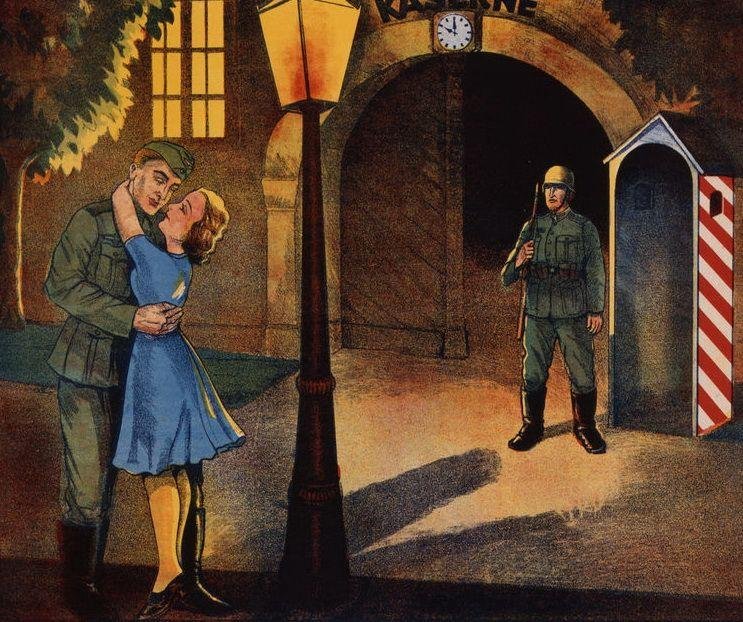
“Lili Marleen” became internationally popular during World War II and was heard by soldiers on both German and Allied sides. Its emotional message crossed national boundaries, allowing people experiencing the hardships of war to connect with its themes of love, loneliness, and hope. Performances by artists such as Lale Andersen and Marlene Dietrich further strengthened the song’s popularity. For many soldiers, it became a reminder of loved ones waiting at home and the peaceful life they hoped to return to after the war.
Ultimately, “Lili Marleen” is more than a wartime love song. It is a moving reflection on the human desire for companionship, the enduring power of memory, and the hope of finding peace after separation. The German Love Song That Crossed Every Front Line in WWII | Aura Vault
Wie einst Lili Marleen Lyrics in German Love Song – Lili Marleen
That night, German radio plays it to soldiers in the North Africans desert. By the next month, British soldiers in Tobruk are humming the German words.
Vor der Kaserne, vor dem großen [singen] Tor
stand eine Laterne und [singen] steht sie noch davor.
So wollen wir [singen] uns da wieder sehen.
Bei der Laterne wollen wir stehen.
Wie einst Lili [singen] Marleen.
Wie einst Lili Marleen.
Unsere beiden Schatten sahen wie einer aus.
Das wir zu lieb uns hatten, das sah [singen] man gleich daraus.
Und alle Leute sollen es sehen, [singen]
wenn wir bei der Laterne stehen.
Wie einst Lili [singen] Marleen.
Wie einst Lili Marleen.
By 1944, this song had been translated into 48 languages.
Marlene Dietrich, who refused Hitler and took American citizenship, recorded it for Allied troops.
Deine Schritte kennt sie, deinen [musik][singen] schönen Gang.
Alle Abend brennt sie, [musik] doch mich vergaß [singen] sie lang.
Und sollte mir ein Leid geschehen,
wer wird bei der Laterne stehen?
Mit dir, [singen] Lili Marleen.
Mit dir, Lili [singen] Marleen.
Aus dem stillen Raume, aus der Erde Grund,
hebt mich [musik] wie im Traume dein
verliebter Mund.
Wenn sich die späten [singen] Nebel drehn,
werd ich bei der [singen] Laterne stehn,
wie einst, [musik] Lili [singen] Marleen.
Wie einst, Lili [musik] Marleen. [singen]
The song that started in a 1915 trench now belonged to everyone who survived the war.
[musik]
Wenn sich [musik] die späten [singen] Nebel drehn,
werd ich bei der Laterne stehn,
[musik]
wie einst, Lili Marleen.
Wie einst, [musik][singen] Lili Marleen
Written By: Hans Leip
Wie einst Lili Marleen Lyrics in English Translation | German Love Song – Lili Marleen
Verse 1
In front of the barracks, by the great entrance gate, there stood a lantern, and it still stands there today. So we shall meet there again, By the lantern, we shall stand. As once before, Lili Marleen, As once before, Lili Marleen.
Verse 2
Our two shadows looked just like one; it was clear to everyone how deeply we loved each other. And everyone should see it, when we stand together by the lantern. As once before, Lili Marleen, As once before, Lili Marleen.
Verse 3
It knows your footsteps, your lovely way of walking. Every evening it burns, but it has long forgotten me. And if sorrow should ever befall me, who will stand by the lantern? With you, Lili Marleen, with you, Lili Marleen.
Verse 4
From the silent chamber, from the depths of the earth, your loving lips lift me as if in a dream. When the late mists begin to swirl, I shall stand by the lantern, as once before, Lili Marleen, as once before, Lili Marleen.
Outro
When the late mists begin to swirl, I shall stand by the lantern, as once before, Lili Marleen, as once before, Lili Marleen.
Lili Marleen गाने का अर्थ (हिंदी में)
“Lili Marleen” एक बेहद भावुक गीत है, जो युद्ध के समय प्रेम, यादों, विरह और बिछड़ने के दर्द को दर्शाता है। इस गीत में एक सैनिक उस महिला को याद करता है, जिससे वह प्रेम करता है। वह उस खास जगह को याद करता है, जहाँ वे दोनों बैरक के बाहर एक लालटेन के नीचे मिला करते थे।
यह लालटेन उनके प्रेम और साथ बिताए खूबसूरत पलों का प्रतीक बन जाती है। समय बीतने और युद्ध के कारण दोनों के अलग हो जाने के बावजूद, सैनिक अपनी प्रेमिका की यादों को संजोकर रखता है और उससे दोबारा मिलने की उम्मीद करता है। यह गीत बिछड़ने के दर्द, युद्ध की अनिश्चितता और मुश्किल समय में पुरानी यादों से मिलने वाले सुकून को खूबसूरती से व्यक्त करता है।
Lili Marleen का ऐतिहासिक महत्व
“Lili Marleen” द्वितीय विश्व युद्ध के दौरान अंतरराष्ट्रीय स्तर पर लोकप्रिय हुआ। यह गीत जर्मन और मित्र राष्ट्रों, दोनों पक्षों के सैनिकों के बीच सुना जाता था। इसकी भावनात्मक अभिव्यक्ति ने राष्ट्रीय सीमाओं को पार कर लिया और युद्ध की कठिनाइयों से जूझ रहे लोगों को प्रेम, अकेलेपन और आशा जैसे साझा भावनात्मक अनुभवों से जोड़ दिया।
लाले एंडरसन (Lale Andersen) और मार्लीन डिट्रिच (Marlene Dietrich) जैसे कलाकारों की प्रस्तुतियों ने भी इस गीत की लोकप्रियता बढ़ाने में महत्वपूर्ण भूमिका निभाई। कई सैनिकों के लिए यह गीत घर पर अपने प्रियजनों की याद दिलाता था और युद्ध के बाद शांतिपूर्ण जीवन में लौटने की उनकी उम्मीद को व्यक्त करता था।
अंततः, “Lili Marleen” केवल युद्ध के समय का एक प्रेम गीत नहीं है, बल्कि यह साथ और अपनापन पाने की मानवीय इच्छा, यादों की स्थायी शक्ति और बिछड़ने के बाद शांति मिलने की उम्मीद को भी दर्शाता है।
Lili Marleen — The German Love Song That Crossed Every Front Line in WWII | Aura Vault
Wie einst Lili Marleen Lyrics in German – Lale Andersen
Lili Marleen, performed by German singer Lale Andersen, is one of the most recognizable German-language songs associated with World War II. Its memorable melody and emotional themes of love, longing, and separation made it popular among soldiers and listeners around the world.
In this article, discover the story behind Lili Marleen, learn about singer Lale Andersen and composer Norbert Schultze, and explore the meaning and historical significance of this famous German song.
Historical note: The poem that inspired the song was written by Hans Leip during World War I. Lale Andersen’s well-known recording dates to 1939. The song’s musical setting was composed by Norbert Schultze.
About Lili Marleen by Lale Andersen
Lili Marleen is a German song that gained international recognition during World War II. Its emotional storytelling focuses on a soldier’s memories of a loved one and a special meeting place beneath a lantern outside the barracks.
The lantern represents a connection between two people whose lives have been disrupted by separation. Through its nostalgic atmosphere, the song expresses the desire to reunite with someone special despite the uncertainty of wartime life.
Lale Andersen’s distinctive vocal performance helped establish the song as a lasting musical classic. Radio broadcasts introduced it to soldiers from different countries, allowing its message of love and longing to cross national boundaries.
Who Was Lale Andersen?
Lale Andersen was a German singer and actress who became internationally famous for her performance of Lili Marleen. Her expressive voice and understated delivery suited the song’s melancholy mood.
Although Andersen’s recording became the best-known early version, the song was later performed by other artists, including Marlene Dietrich. Different interpretations helped preserve its place in international music history.
Who Composed Lili Marleen?
Norbert Schultze composed the music for Lili Marleen. The lyrics originated from a poem written by Hans Leip during World War I.
The combination of Leip’s nostalgic words and Schultze’s memorable melody helped turn the poem into a song that resonated with audiences during a later global conflict.
Lili Marleen Song Meaning
The meaning of Lili Marleen centers on love, memories, longing, and separation. The narrator remembers a beloved woman and the place where they used to meet. These memories provide emotional comfort during a period of uncertainty.
The lantern outside the barracks is an important symbol in the song. It represents a shared past, a romantic connection, and the hope of seeing a loved one again.
Although the song became famous during wartime, its emotional message is universal. Anyone who has experienced distance from a loved one can relate to its themes of remembrance and the desire for reunion.
Why Did Lili Marleen Become Famous?
Lili Marleen became especially popular during World War II because its emotional themes were familiar to soldiers separated from their families and partners.
The song was broadcast to military audiences and became known on both sides of the conflict. Its popularity demonstrated how music can communicate shared human feelings even during periods of division and hardship.
Today, Lili Marleen remains an important example of how a song can become connected with a particular historical period while continuing to speak to listeners across generations.
FAQ’s | Wie einst Lili Marleen
1. What is the name of the song Wie einst Lili Marleen?
The song is widely known as Lili Marleen. The phrase Wie einst Lili Marleen is associated with German-language references to the song.
2. Who sang Lili Marleen in German?
Lale Andersen performed the famous German-language recording of Lili Marleen.
3. Who composed the music for Lili Marleen?
Norbert Schultze composed the music for Lili Marleen.
4. Who wrote the lyrics of Lili Marleen?
The song originated from a poem written by Hans Leip. Later adaptations of the lyrics were also used.
5. When was Lili Marleen released?
Lale Andersen’s famous recording dates to 1939. The poem that inspired the song was written earlier, during World War I.
6. What is the meaning of Lili Marleen?
The song expresses love, longing, memories, and the sadness of being separated from someone special, particularly during wartime.
7. Why is Lili Marleen historically important?
It became an internationally recognized wartime song, heard by soldiers on opposing sides of World War II.
Lili Marleen, performed by Lale Andersen, remains a memorable German-language song because of its emotional melody and historical significance. Its themes of love, separation, and hope continue to connect with listeners around the world.
More Songs Like You:
सुखकर्ता दुखहर्ता Sukhkarta Dukhharta Aarati Lyrics in Marathi | Lata Mangeshkar
मित्र Mitra Lyrics in Marathi – Kanha
तो समझो ना Toh Samjho Na Lyrics in Hindi –THE VVAAN
फुलतो जसा मोगरा Fulto Jasa Mogra Lyrics – Abhay Jodhpurkar, Reeshika Mukherjee
चिमना Chimna Lyrics in Hindi – Badshah, Divya Kumar | Nagesh Morwekar
ऐक ना Aaik Na Lyrics in Marathi – SWAGER BOY| Gaaurriiee
वस्तगुण हुयिया Vastaguna Huiya Lyrics in Marathi – Danny Pandit
तबाही Tabaahi Lyrics in Hindi – Vishal Mishra